Somewhere in the annals of alternative music, it was decreed anything that makes a statement, that turns a head or furrows a brow, must certainly fall into the realm of quote-unquote punk.
It’s been a long-held understanding that subversive lyrics paired with anything nearing guttural vocals or dark imagery be classified as such. And forthwith placed in a world one step outside of our construct of convention, in its own time and place and out of sight for those uninterested in disrupting the status quo.
But as the name may hint, this is of no concern to Mannequin Pussy.
The Philly-bred quartet isn’t concerned with the genre their music does or doesn’t fall into. The real intention here is to give emotion a place to exist — despite societal constraints.
Lead vocalist Marisa “Missy” Dabice says the band recognizes the systems under which we live lend little room to openly feel.
“I think that constantly the powers that be are trying to diminish our own relationship to our anger by convincing us that we’re insane for being angry in the first place,” Dabice tells Orlando Weekly ahead of the band’s stop in Orlando this week.
Mannequin Pussy’s ethos is to offer a space for catharsis, to invite people to scream and feel — themes not lost in their latest album, I Got Heaven.
The critically acclaimed album is the current touring mechanism for the band — consisting of members Dabice, Colins “Bear” Regisford (bass, vocals), Kaleen Reading (drums) and Maxine Steen (guitar, synths). I Got Heaven, their fourth record, has been met with wide success since its release in March, culminating in what has been a largely sold-out nationwide run.
The album, produced by indie veteran John Congleton, bites into themes of unapologetic desire, Christian hypocrisy and emotional complexity.
Before its release, the album’s title track debuted as its first single. The song’s music video sees Dabice and band, clad in soft whites and denim, on a farm. Performing, dancing and thrashing atop hay bales, in a field of corn and among animals, Mannequin Pussy places itself in the face of the natural world versus domestication.
These visuals, paired with lyrics like “What if I was confident, would you just hate me more?”, point to Dabice’s release of a “feral femininity.” Despite being part of the animal world ourselves, she says, we’re not always afforded the luxury of expressing natural desire freely.
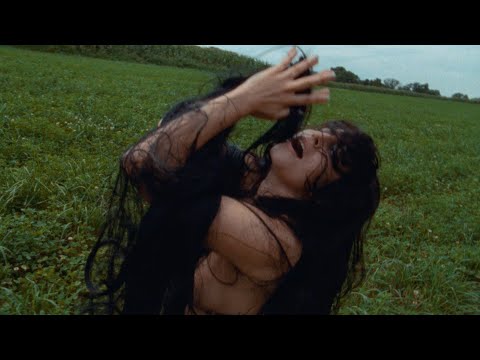
“The expectations of what femininity is supposed to be is this construct that’s really seen as being in service to other people,” she says. “I still think we’re living in a time where most women are really seen as just a form of cattle, rather than human beings who have thoughts, feelings and creativity inside of them.”
Dabice uses performance as a display of her refusal to accept this reality. She leans into presenting herself in an ultra-feminine way when onstage, a complement to raging vocals and animalistic anger. “On the outside, you can appear as though everything is very clean and orderly, but inside, there’s just this eternal flame of rage that is burning,” she says.
Juxtaposition like this is an essential throughline in I Got Heaven, and throughout Mannequin Pussy’s music. Rage (“Loud Bark,” “Of Her”) comes hand-in-hand with potent sensuality and emotional intimacy (“I Don’t Know You,” “Split Me Open”). It’s feral meets subdued. It’s much like their name: something so sterile and inhuman meets one’s most intimately human piece of oneself.
Mannequin Pussy have long championed spitting in the face of normalcy and expectation. They’ve had to. From early on, their name has come with obstacles in the form of censorship.
It’s only been within the past year the band saw its name — sans asterisks or dashes — printed in the New York Times and spoken on NPR, thanks to the success of I Got Heaven. But it’s not lost on Dabice why this is the reality.
“I’m not trying to play dumb here,” she says. “It’s just that we don’t care that they find it offensive, because the intention is not to offend. The intention is to expand our understanding of not only art, but what words are available to us and what words mean.”
Dabice admits the name may still pose some setbacks (namely a lack of network invitations) but, again, she doesn’t care. It helps keep the squares away, she says.
“We’re reaching the people that we’re meant to reach, and I can’t force us upon anyone in any other way.”
And the squares remain few and far between at Mannequin Pussy shows. Dabice wants each show to be a safe place for people to be themselves, absolved of judgment.
“We need more pockets in our world where we have complete freedom to be the thoughtful freak that we are, instead of trying to constantly diminish our light for other people.”
A pocket like that is where fans can find a little piece of heaven, uncensored.
The Beacham
46 N. Orange Ave., Orlando, FL
407-648-8363
Subscribe to Orlando Weekly newsletters.
Follow us: Apple News | Google News | NewsBreak | Reddit | Instagram | Facebook | Twitter | or sign up for our RSS Feed

This article appears in Oct 23-29, 2024.